Why Inspection and Repair Under One Roof Matters
Getting a DOT inspection at a dedicated inspection-only station means that if your truck fails, you now need to find a repair shop, schedule the fix, and come back for reinspection - three separate steps that cost time your truck should be spending on the road. We perform inspection and repair together. When we find a violation during your inspection, we fix it the same visit, and your truck leaves with a current sticker and everything corrected.
Call (515) 450-0366 or schedule online. We can often combine your inspection with routine maintenance to save you a separate trip.
What the Annual Inspection Actually Covers
Under 49 CFR Part 396.17, the annual inspection covers brake systems (both service and parking brakes, including air system components), steering mechanism, lighting devices and reflectors, tires and wheels, coupling devices for combination vehicles, exhaust systems, frame condition, fuel systems, and driver-facing safety equipment like the emergency triangle kit and fire extinguisher. Trailers require the same scope of inspection independently from the tractor pulling them.
We document every inspection with the required paperwork for your compliance file, including the specific components checked and their pass/fail status, so you have a complete record if a roadside officer or your insurance carrier asks for it.
Common Violations We Find and Fix
Brake adjustment issues are the most frequent violation we see - pushrod stroke on air brake systems that has drifted out of specification, which is a quick fix during inspection but a serious violation if caught at a weigh station instead. Lighting violations come next: damaged, missing, or non-functional marker lights, clearance lights, or brake lights, often from road debris or trailer coupling wear rather than bulb failure. Tire condition below minimum tread depth or showing cord is straightforward to catch and address during a scheduled inspection. Air system leaks - an audible leak from a line, fitting, or chamber - get fixed on the spot rather than sent home with a warning.
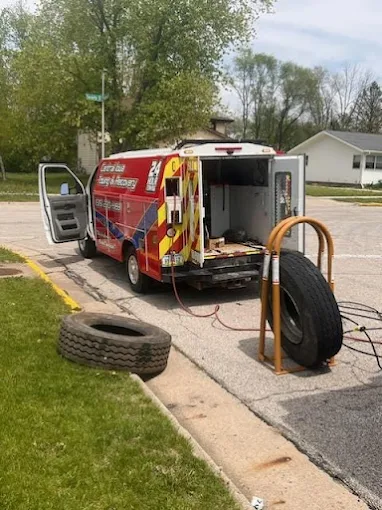
What Happens If You Fail a Roadside Inspection Instead
Iowa weigh stations on I-35 and I-80 actively check inspection status and perform roadside inspections. Depending on the severity of a violation found roadside, an officer either issues a citation with a deadline to repair, or places the vehicle out-of-service immediately for anything safety-critical, like inadequate brakes. An out-of-service order means the truck cannot move until the defect is corrected and reinspected - which means a load sitting, a driver stuck, and a schedule disruption that a scheduled inspection at our shop would have prevented entirely.
Trailer Inspections: Do Not Overlook Them
Trailers require their own annual DOT inspection independent of whatever tractor is pulling them at the time. Because trailers frequently change tractors, their inspection status can get overlooked if a fleet is not tracking each unit individually. Trailer brake systems specifically deserve attention here - they do more of the stopping work on a loaded combination than most people assume, and can wear without the kind of routine attention a dedicated tractor gets.
Fleet Inspection Scheduling
For fleets running multiple trucks and trailers with staggered inspection renewal dates, we track per-unit inspection status as part of a fleet maintenance account, flagging upcoming renewals before they lapse. This is far more reliable than each unit's inspection date living in a separate spreadsheet or, worse, in someone's memory.
Why Insurance Carriers and Brokers Care About Inspection Status
Beyond DOT compliance itself, a current and clean inspection record matters for insurance and broker relationships. Some insurance carriers adjust premiums based on a fleet's inspection and violation history, and freight brokers increasingly check carrier safety scores before assigning loads. A pattern of out-of-service violations shows up in your CSA (Compliance, Safety, Accountability) score through the FMCSA, which is visible to brokers and can affect which loads you get offered. Keeping inspections current and violations corrected promptly is not just about avoiding a roadside citation - it protects your standing with the people who decide whether to trust you with freight.
Timing Your Inspection Around Seasonal Demand
For owner-operators and small fleets, scheduling the annual inspection strategically matters. Getting it done in early fall, before winter driving conditions and before the holiday freight surge, means your truck is not competing for shop time during the busiest season and is not caught with an expiring inspection during peak winter breakdown risk. Agricultural operators running grain trucks should plan inspections before harvest season begins in August, since a trailer or truck pulled out of rotation for inspection repairs during harvest costs far more in lost hauling time than the same repair scheduled in July.
Call (515) 450-0366. Inspection and repair under one roof, full documentation for your compliance file.